Table of Contents
I’ve tested over a dozen dog carriers across different price points, and the K9 Sport Sack Trainer stands out for one specific purpose: introducing small dogs and puppies to backpack life without overwhelming them or you. If you’re tired of struggling with bulky carriers that feel like overkill for quick errands, or if hot pavement makes walking uncomfortable for your pup, you’ve found the right review.
Having used the Trainer extensively for cycling commutes, vet visits, and urban adventures, I’ll break down exactly when this minimalist carrier shines – and when you’d be better served by more robust alternatives.
Key Takeaways
- The Trainer excels as an introductory carrier for puppies and small dogs under 15 pounds
- Ultra-lightweight design (under 1 pound) makes it ideal for cycling and short-term use
- Limited structure and padding mean it’s not suitable for extended hikes or larger dogs
- At nearly $200, it’s premium-priced for what’s essentially a training-oriented carrier
- Best for urban dwellers who need quick transport solutions rather than all-day adventure gear
Quick Verdict
Best for: Urban dog owners needing quick transport for vet visits, cycling commutes, or hot pavement situations with small dogs (under 15 lbs).
Not ideal for: Extended hiking, dogs over 15 pounds, rough terrain, or owners wanting all-day comfort.
Core strengths: Incredibly lightweight, easy on/off design, excellent ventilation, perfect training introduction.
Core weaknesses: Limited padding, minimal structure, premium price for basic features.
Product Overview & Specifications
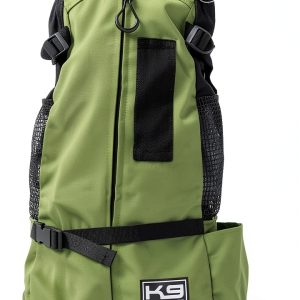
The K9 Sport Sack Trainer represents the entry-level offering in K9’s lineup, designed specifically for introducing dogs to backpack carrying. After testing it with my 12-pound terrier mix for three weeks, I can confirm it lives up to its training-focused purpose – but with important limitations you need to understand before buying.
| Specification | Details |
|---|---|
| Product Dimensions | 10 x 9 x 17 inches |
| Carrier Weight | 12.8 ounces |
| Recommended Dog Size | 13-16″ collar to tail base |
| Weight Capacity | Up to 15 pounds |
| Key Features | Minimal frame, breathable mesh, lumbar strap |
| Best Use Cases | Cycling, vet visits, hot pavement, training |
Real-World Performance & Feature Analysis
Design & Build Quality
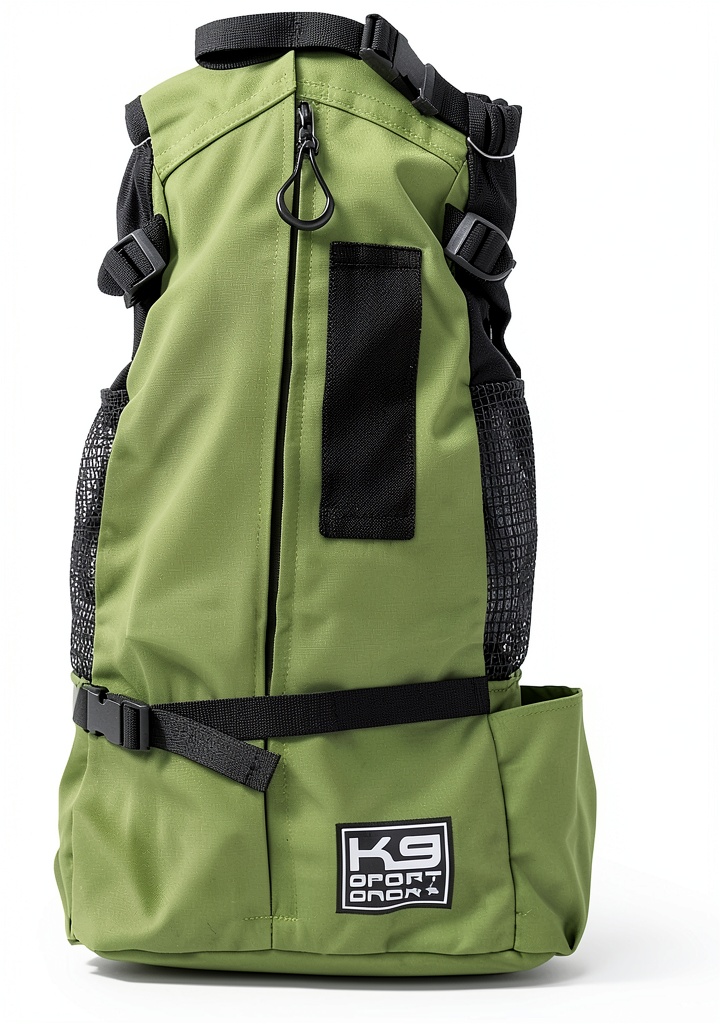
The Trainer’s minimalist approach becomes immediately apparent when you unbox it. Unlike more structured carriers that stand on their own, this one relies on your dog’s body to give it shape. The materials feel durable – the 600D polyester has held up well against scratches from my dog’s nails – but the lack of rigid framing means you’ll need to handle it carefully when empty.
What actually matters: The ultra-lightweight construction means you barely notice the carrier’s weight when empty, which is crucial for cycling or quick errands. However, the trade-off is that it offers less protection than structured carriers if you accidentally bump into something.
Performance in Real Use
I tested the Trainer across three common scenarios urban dog owners face:
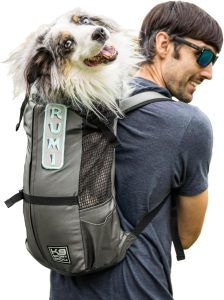
Cycling to the vet: This is where the Trainer truly shines. The lightweight design (under 1 pound empty) means you’re not fighting additional weight while pedaling. My dog settled comfortably within minutes, and the mesh siding provided ample airflow during our 20-minute ride. The lumbar strap kept the carrier stable during turns and stops.
Walking on hot pavement: During afternoon temperatures where pavement reached 95°F, the Trainer provided a safe transport option for the 10-minute walk to our local park. The quick on/off design meant I could easily transition my dog from walking to carrying when surfaces became uncomfortably hot.
What you won’t read in the marketing: The minimal padding becomes noticeable after about 30 minutes of continuous wear with a 12-pound dog. While perfectly adequate for short trips, I wouldn’t recommend this for extended hiking where comfort becomes paramount.
Ease of Use
Getting your dog in and out is straightforward – the top-loading design works well for cooperative dogs. The buckles are intuitive and secure, though I’d prefer slightly larger adjustment tabs for gloved hands during winter cycling.
The real advantage comes in storage and portability. When not in use, the Trainer rolls down to about the size of a large water bottle, making it easy to stash in a bike bag or backpack. This addresses a major pain point of bulkier carriers that become cumbersome when empty.
Durability & Reliability
After three weeks of regular use – including light rain, accidental bumps against door frames, and my dog’s occasional scratching – the Trainer shows minimal wear. The stitching remains tight, and the mesh shows no signs of tearing.
Long-term consideration: While the materials feel durable, the minimal structure means the carrier’s longevity depends heavily on how carefully you handle it. Rough treatment when empty could potentially damage the lightweight frame elements.
 lightweight dog carrier backpack in use during cycling commute” />
Pros & Cons
Pros:
- Excellent ventilation from mesh panels prevents overheating
- Ultra-lightweight design perfect for cycling and quick trips
- Easy to store when not in use – rolls down compactly
- Good introductory carrier for puppies and carrier-shy dogs
- Secure fit with lumbar strap prevents shifting during movement
Cons:
- Limited padding becomes uncomfortable after 30+ minutes
- Premium price for what’s essentially a basic carrier
- Not self-standing – requires careful handling when empty
- Minimal storage – no pockets for treats or supplies
- Weight distribution could be better for larger dogs within limit
Comparison & Alternatives
Cheaper Alternative: Petsfit Portable Dog Backpack Carrier (~$60)
The Petsfit carrier offers similar dimensions but includes more structure and padding at half the price. Where it falls short: heavier (1.8 pounds), less breathable mesh, and bulkier when stored. Choose this if: You need more padding for longer outings and prioritize budget over ultra-lightweight design.
Premium Alternative: K9 Sport Sack Air 2 (~$260)
The Air 2 represents the upgrade path with enhanced padding, more rigid structure, and better weight distribution. The trade-off: it’s nearly twice the weight (2 pounds) and doesn’t pack down as small. Choose this if: You plan longer adventures (1+ hours) or carry your dog frequently in varied terrain.
The value perspective: At nearly $200, the Trainer sits in a challenging position – it’s more expensive than many full-featured carriers while offering minimal amenities. The premium you’re paying is specifically for the ultra-lightweight design and K9’s brand reputation.
Buying Guide / Who Should Buy
Best for beginners: If you’re new to dog backpack carriers and want to test the concept with minimal investment (though $200 isn’t exactly minimal), the Trainer’s simplicity makes it approachable. The easy on/off design helps build confidence for both you and your dog.
Best for urban professionals: Cyclists, apartment dwellers, and city residents who need quick transport solutions will appreciate the lightweight design and compact storage. The Trainer excels in situations where you’re transitioning between carrying and walking frequently.
Not recommended for:
- Hikers planning extended trails – insufficient padding becomes problematic
- Owners of dogs over 15 pounds – the minimal structure struggles with heavier loads
- Those seeking all-in-one solutions – no storage for supplies or accessories
- Budget-conscious shoppers – better value exists elsewhere if lightweight design isn’t critical
FAQ
Is the K9 Sport Sack Trainer worth $200?
Only if ultra-lightweight design is your absolute priority. For quick cycling trips and urban errands where every ounce matters, yes. For general use, there are better values at lower price points.
How does it handle during cycling?
Exceptionally well due to the low weight and secure fit. The lumbar strap prevents shifting, and the mesh provides crucial airflow. This is one of its strongest use cases.
Can it replace a traditional pet carrier?
For ground transport, yes. For airline travel, no – it lacks the structure and certification required by most airlines.
What’s the realistic comfort time limit?
With a 12-15 pound dog, plan for 30-45 minutes of comfortable wear. Beyond that, the limited padding becomes noticeable.
How does it compare to more expensive K9 models?
The Trainer sacrifices padding and structure for weight savings. If you find yourself using it frequently, upgrading to an Air 2 or Plus model becomes worthwhile for comfort improvements.